
Palm Oil's Not-so-Beautiful Sunset?
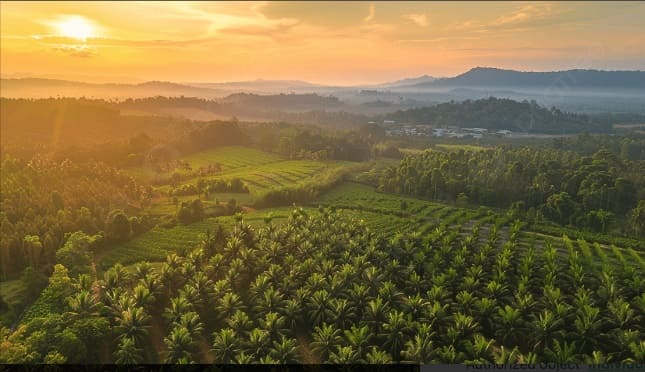

- Yields will fall
- Costs will increase
- Palm Oil industry stagnates.
But Soybean Planting looks set to Increase…
While the planted area for oil palm trees has stagnated for the past few years, that of soybeans has been rising rapidly, especially in Brazil.
In Indonesia and Malaysia, much of the land suitable for oil palm cultivation is already developed. Other potentially suitable areas are often environmentally sensitive (such as peatlands, forests or high conservation value zones) or protected under international sustainability commitments.
On the other hand, the increase in demand for soy protein and biodiesel is driving the expansion of production in soybean oil. Soybean oil is a feedstock for biodiesel production in the US, much like palm oil is for Indoneisa. The United States and Brazil produce some 70% of the the world’s soybean. Brazil’s soybean sector is expected to continue growing on the back of favourable government policies, strong export demand and improving production technology.
At the same time, we are are seeing a surge in soyoil exports from China after importing record volumes of soybean purchases in 2025. This was driven by large purchases from South America in response to trade tensions resulting from the Liberation Day Tariffs. If this production trend continues, soyoil will inevitably make further inroads in the vegetable oil consumption mix.
Data Centre Boom another Spanner in the Works
Adding to the declining outlook for Malaysia’s palm oil supply, it has been reported that major palm oil companies have earmarked major tracts of land for industrial centre projects which will house data centres and renewable energy projects.
Such development will be more lucrative in terms of the land value for industrial development as compared to land value for palm oil usage. Even more so if the land is in Johor which has pretty much become the Virginia of the US.
It is thought that at least 5 gigawatts of electricity will be needed for data centres by 2035. This is almost 20% of our current electricity generation capacity.
SD Guthrie, with over 340,00 hectares in Malaysia, has set aside some 10,000 hectares for solar farms. It aims to have one gigawatt ready in 3 years and this may require around 1,500 hectares of land. IOI Corp, another key player, is looking towards at least 300 megawatts of solar farms. This is almost 500 hectares of land.
While these acreage seems relatively small in terms of the overall planted area, the trend could be irreversible and smaller players with strategic land will also want a piece of the action. Will the mad rush for computing power add to the malaise facing our palm oil industry? Looks like the sunset has begun but may not end up so beautifully for our golden crop.