
The Four DISC Quadrants Of Investment Legends
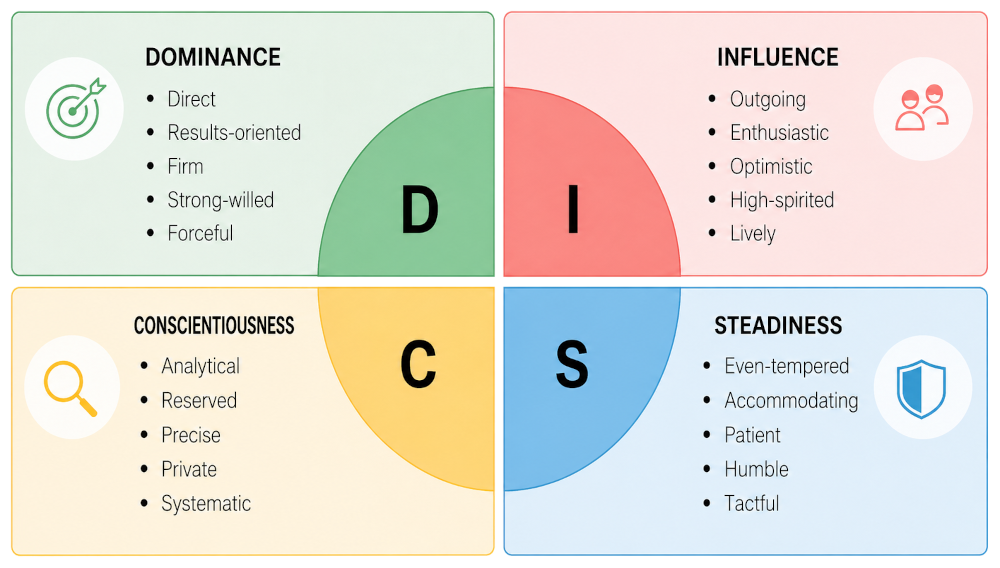
As investors, it is often useful to have a good understanding of how we behave. The DISC human behavioral model evaluates human communication and work styles by categorizing actions into four core axes: Dominance (D), Influence (i), Steadiness (S), and Conscientiousness (C).
Core Behavioral Profiles
Dominance (D):
Fast-paced and highly task-focused. Individuals scoring high in this quadrant are competitive, results-driven, direct, and comfortable taking charge to solve problems.
Fast-paced and highly task-focused. Individuals scoring high in this quadrant are competitive, results-driven, direct, and comfortable taking charge to solve problems.
Influence (I):
Fast-paced and strongly people-focused. High-I behaviors emphasize persuasion, collaboration, and building social relationships with high enthusiasm and optimism.
Fast-paced and strongly people-focused. High-I behaviors emphasize persuasion, collaboration, and building social relationships with high enthusiasm and optimism.
Conscientiousness (C):
Slower-paced and deeply task-focused. High-C behavioral styles prioritize precision, quality, compliance, and objective analysis using systemic expertise.
Slower-paced and deeply task-focused. High-C behavioral styles prioritize precision, quality, compliance, and objective analysis using systemic expertise.
Steadiness (S):
Slower-paced and highly people-focused. This profile centers on reliability, patience, and team cooperation, favoring stable environments and steady, predictable execution.
Slower-paced and highly people-focused. This profile centers on reliability, patience, and team cooperation, favoring stable environments and steady, predictable execution.
With that in mind, let’s take a look at some investment legends and their personality style.
WARREN BUFFETT

In a DISC analysis, Warren Buffett is primarily classified as a High C (Conscientiousness), often paired with a secondary S (Steadiness) trait. Here is how his behavioral style breaks down:
Conscientiousness (High C): This dominates his profile. He is deeply analytical, objective, and driven by data, logic, and facts. His famous “value investing” strategy relies on meticulously analyzing financial reports and footnotes rather than following market hype.
Steadiness (High S): This reflects his immense patience, predictability, and long-term loyalty. He famously buys stocks and holds them for decades, operating out of the same quiet office in Omaha, Nebraska, and avoiding impulsive, fast-paced changes. Also supporting this is his long time business partnership with Charlie Munger based on mutual trust, respect and low drama.
Conscientiousness (High C): This dominates his profile. He is deeply analytical, objective, and driven by data, logic, and facts. His famous “value investing” strategy relies on meticulously analyzing financial reports and footnotes rather than following market hype.
Steadiness (High S): This reflects his immense patience, predictability, and long-term loyalty. He famously buys stocks and holds them for decades, operating out of the same quiet office in Omaha, Nebraska, and avoiding impulsive, fast-paced changes. Also supporting this is his long time business partnership with Charlie Munger based on mutual trust, respect and low drama.
Influence (Low I): He prefers quiet reflection and reading over seeking the spotlight or engaging in high-energy public relations.
Overall, he embodies the “Objective Thinker” or “Analyst” archetype in the DISC system, valuing accuracy and stability above all else.
Overall, he embodies the “Objective Thinker” or “Analyst” archetype in the DISC system, valuing accuracy and stability above all else.
CHARLIE MUNGER

Based on his public persona, decision-making style, and philosophy, a DISC character analysis of Charlie Munger places him firmly as a High C (Conscientiousness) with a secondary D (Dominance).
C – Conscientiousness (Very High)
This is Munger’s dominant quadrant. He was defined by a relentless pursuit of objectivity, logic, and data.
C – Conscientiousness (Very High)
This is Munger’s dominant quadrant. He was defined by a relentless pursuit of objectivity, logic, and data.
- Analytical Rigor: He famously used a “checklist” approach to investing and developed a framework of multiple mental models to understand the world.
- Risk Aversion: He focused heavily on the margin of safety, famously stating that his goal was not to be smart, but to consistently avoid being idiotic.
- Emotionless Logic: He actively trained himself to eliminate cognitive biases and emotional impulses from his decision-making.
D – Dominance (High)
Munger possessed a strong, blunt, and results-oriented drive that balanced his analytical nature.
Munger possessed a strong, blunt, and results-oriented drive that balanced his analytical nature.
- Direct Communication: He was legendary for his extreme candor, often cutting through pleasantries to call an idea “stupid” or “asinine.”
- Independent Thinking: He had high confidence in his own conclusions, completely disregarding market trends or popular consensus.
- Efficiency: He valued brevity and immediate bottom-line results, often summarizing complex financial situations in just a few sharp sentences.
S – Steadiness (Moderate)
While not his driving force, Munger exhibited “S” traits through his extreme patience and loyalty.
While not his driving force, Munger exhibited “S” traits through his extreme patience and loyalty.
- ”Sit-on-Your-Ass” Investing: He advocated for extreme patience, waiting years for the right opportunity and holding stocks for decades.
- Loyalty: He maintained a seamless, 50-year business partnership with Warren Buffett based on mutual trust, respect and low drama.
I – Influence (Low)
This was Munger’s lowest quadrant. He had very little interest in persuasion, social approval, or superficial networking.
This was Munger’s lowest quadrant. He had very little interest in persuasion, social approval, or superficial networking.
- Reclusion over Radiance: He preferred reading in a quiet room to wining and dining clients.
- Anti-Demagogue: He did not use emotional rhetoric or charm to convince others; he expected the facts to speak for themselves.
- Summary: Charlie Munger was a classic “Objective Thinker” (C/D) profile. He used deep analytical systems (C) to determine absolute truth, and used blunt, decisive action (D) to execute his strategy without caring what others thought.
BILL ACKMAN
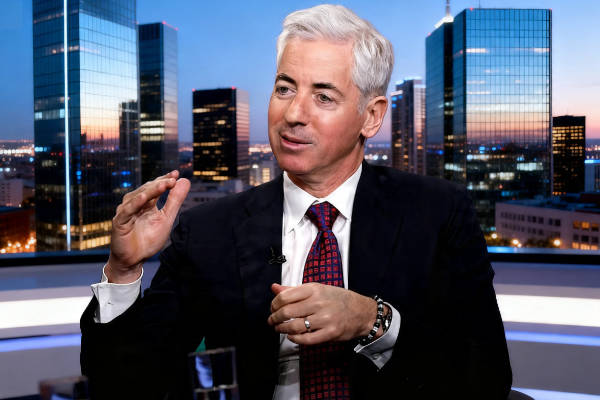
Bill Ackman primarily embodies the Dominance (D) personality style in the DISC model, with a strong secondary influence of Conscientiousness (C). He is heavily driven by results, intense conviction, and challenging the status quo.
Dominance (D) – Primary Style
Ackman is defined by the core traits of the D-style: Direct and Driven: Known for his large, highly concentrated, and audacious bets, such as his successful Covid-19 hedge.
Activists/Challengers: He doesn’t just invest passively; he actively pushes for boardroom and operational changes to “fix” underperforming companies.
Results-Oriented: He focuses on high-conviction goals and relies on sheer willpower and confidence to see his investment theses through.
Dominance (D) – Primary Style
Ackman is defined by the core traits of the D-style: Direct and Driven: Known for his large, highly concentrated, and audacious bets, such as his successful Covid-19 hedge.
Activists/Challengers: He doesn’t just invest passively; he actively pushes for boardroom and operational changes to “fix” underperforming companies.
Results-Oriented: He focuses on high-conviction goals and relies on sheer willpower and confidence to see his investment theses through.
Conscientiousness (C) – Secondary Style
Alongside his dominant force, Ackman exhibits C-style traits:
Analytical and Detail-Driven: Before taking a position, Pershing Square conducts exhaustive, deep-dive research into a company’s financials and industry trends.
Data-Driven: His activist campaigns are typically backed by hundreds of pages of intricate slide presentations and mathematical analysis.
Alongside his dominant force, Ackman exhibits C-style traits:
Analytical and Detail-Driven: Before taking a position, Pershing Square conducts exhaustive, deep-dive research into a company’s financials and industry trends.
Data-Driven: His activist campaigns are typically backed by hundreds of pages of intricate slide presentations and mathematical analysis.
Influence (I) characteristic also visible, which is unusually strong for a typical analytical investor. In a standard DISC profile, he likely presents as a D-I-C pattern, where his love for the spotlight serves his strategic goals. While classic “I” personalities are purely people-oriented and social, Ackman uses his “I” traits as a powerful tool:
Spotlight-Seeking: Unlike traditional hedge fund managers who operate in the shadows, Ackman thrives in front of the camera. He frequently uses CNBC appearances, lengthy documentaries, and massive public presentations to pitch his ideas.
Persuasive Storytelling: As a charismatic communicator, he doesn’t just present data; he crafts a narrative to persuade the public, regulators, and other shareholders to join his side.
Highly Expressive: He uses social media platforms like X (formerly Twitter) extensively to share his opinions, debate critics, and rally public sentiment on business and social issues.
Spotlight-Seeking: Unlike traditional hedge fund managers who operate in the shadows, Ackman thrives in front of the camera. He frequently uses CNBC appearances, lengthy documentaries, and massive public presentations to pitch his ideas.
Persuasive Storytelling: As a charismatic communicator, he doesn’t just present data; he crafts a narrative to persuade the public, regulators, and other shareholders to join his side.
Highly Expressive: He uses social media platforms like X (formerly Twitter) extensively to share his opinions, debate critics, and rally public sentiment on business and social issues.
MICHAEL BURRY

Michael Burry would primarily be classified as a CD (Conscientious/Dominant) or CS (Conscientious/Steadiness) profile in the DISC framework. He is driven by rigorous data, rules, and logic, while his D-style traits provide the fearlessness to take aggressive, contrarian actions against the financial herd. His behavioral breakdown through the DISC lens:
High Conscientiousness (C) Traits: Analytical, reserved, systematic, and highly data-driven. Burry’s Style: Burry is a classic ‘C’ because he prefers to spend immense amounts of time deeply researching fundamentals and financial statements in isolation. He prioritizes facts and figures over intuition or social consensus.
High Conscientiousness (C) Traits: Analytical, reserved, systematic, and highly data-driven. Burry’s Style: Burry is a classic ‘C’ because he prefers to spend immense amounts of time deeply researching fundamentals and financial statements in isolation. He prioritizes facts and figures over intuition or social consensus.
Dominance (D) Traits: Results-oriented, independent, and direct. While many pure ‘C’ types might hesitate to act without perfect alignment, Burry’s high D gives him the confidence to stand his ground. He is comfortable taking calculated risks and has no issue rejecting the opinions of Wall Street. A recent example is his stance on t he pre-IPO valuation of SpaceX and Anthropic. On SpaceX, the “Big Short” investor reportedly said that “Nothing in that S-1 suggests it is worth $1 trillion let alone $2 trillion.” While on Anthropic he remarked that “there is no guarantee, and not even a strong likelihood, that Anthropic is long-term worth anywhere near $1 trillion”. Burry added that Anthropic’s business of developing cutting-edge AI models is far too expensive and uses too much brute force as computing power would become commoditized over time, much like Internet use. Burry wrote that “what is happening now is a false demand signal, echoing his recent warning that the “tokenmaxxing” trend won’t last.
3. Low Influence (I) and High Steadiness (S) Traits: Unbothered by social disapproval, highly disciplined. Burry demonstrates a very low ‘I’ characteristics, as he has historically avoided public relations, “talking his book,” or charming investors. His ‘S’ (Steadiness) emerges through his extreme patience, as he can hold a highly scrutinized short position for years despite enormous pushback.
Ultimately, Burry uses his C-style to find the flaws in the system, and his D-style to bet heavily against it.
Ultimately, Burry uses his C-style to find the flaws in the system, and his D-style to bet heavily against it.
PETER LYNCH

If Michael Burry is the hyper-isolated, data-obsessed analyst, Peter Lynch – the legendary investor who ran Fidelity Magellan Fund – is the ultimate, crowd-pleasing High I (Influence) with a strong secondary S (Steadiness).
Lynch’s entire philosophy can be summarized by his famous mantra: “Invest in what you know.” While other legendary investors isolated themselves in rooms full of spreadsheets, Lynch made his fortunes by talking to people, walking through shopping malls, and observing everyday human behavior.
In the DISC framework, he is a classic “Relater” or “Promoter” archetype. Here is how his style breaks down:
Lynch’s entire philosophy can be summarized by his famous mantra: “Invest in what you know.” While other legendary investors isolated themselves in rooms full of spreadsheets, Lynch made his fortunes by talking to people, walking through shopping malls, and observing everyday human behavior.
In the DISC framework, he is a classic “Relater” or “Promoter” archetype. Here is how his style breaks down:
Influence (High I): The People Investor
The “I” trait is characterized by enthusiasm, collaboration, open communication, and a people-centric worldview. Lynch embodied this more than almost any other Wall Street titan:
The “Boots on the Ground” Approach: Lynch didn’t just look at numbers; he looked at human behavior. He famously discovered blockbuster stocks like Hanes (L’eggs pantyhose) because his wife loved the product, and Taco Bell because he ate a burrito there and liked the taste. Democratizing the Market: High I personalities love to coach, share knowledge, and uplift others. Lynch wrote best-selling books like One Up on Wall Street specifically to convince the average person that they could beat the pros on Wall Street just by using their everyday intuition and common sense.
Conversational Research: He spent immense amounts of time talking to store managers, consumers, and entry-level employees to gauge the health of a company, relying heavily on qualitative, verbal data.
The “I” trait is characterized by enthusiasm, collaboration, open communication, and a people-centric worldview. Lynch embodied this more than almost any other Wall Street titan:
The “Boots on the Ground” Approach: Lynch didn’t just look at numbers; he looked at human behavior. He famously discovered blockbuster stocks like Hanes (L’eggs pantyhose) because his wife loved the product, and Taco Bell because he ate a burrito there and liked the taste. Democratizing the Market: High I personalities love to coach, share knowledge, and uplift others. Lynch wrote best-selling books like One Up on Wall Street specifically to convince the average person that they could beat the pros on Wall Street just by using their everyday intuition and common sense.
Conversational Research: He spent immense amounts of time talking to store managers, consumers, and entry-level employees to gauge the health of a company, relying heavily on qualitative, verbal data.
Steadiness (High S): The Patient Generalist
While Lynch traded a lot of stocks, his underlying temperament reflects the “S” trait’s patience and grounded nature:
Emotional Discipline: Lynch frequently preached that the most important organ for investing isn’t the brain, it’s the stomach. He had the “S” resilience to stay calm during market crashes (like Black Monday in 1987), advising investors not to panic sell good companies.
Relatability and Humility: Despite his remarkable success, Lynch is said to be incredibly approachable, humble, and fiercely loyal to his team and his everyday investment principles. His best selling book “One Up on Wall Street” has been an inspiration and invaluable resource to countless investors earning acclaims as one of the best investing books ever written.
While Lynch traded a lot of stocks, his underlying temperament reflects the “S” trait’s patience and grounded nature:
Emotional Discipline: Lynch frequently preached that the most important organ for investing isn’t the brain, it’s the stomach. He had the “S” resilience to stay calm during market crashes (like Black Monday in 1987), advising investors not to panic sell good companies.
Relatability and Humility: Despite his remarkable success, Lynch is said to be incredibly approachable, humble, and fiercely loyal to his team and his everyday investment principles. His best selling book “One Up on Wall Street” has been an inspiration and invaluable resource to countless investors earning acclaims as one of the best investing books ever written.
| Investor | DISC Profile | Core Focus | Behaviour / Style/ Hallmark |
| Warren Buffett | High C / S (Conscientiousness/Steadiness) | Logic & Patience | Analyzes deep value, avoids hype, and holds quality companies for decades. |
| Charlie Munger | High C / D | Objective Logic | Influenced Warren Buffett by shifting his investing philosophy from buying average companies at bargain prices to paying fair prices for exceptional businesses. Widely quoted for his interdisciplinary observations and approach to investing. |
| Bill Ackman | High D (Dominance) | Control & Results | Actively forces change, challenges management, and drives public battles. |
| Michael Burry | High C / D (Conscientiousness/Dominance) | Data & Accuracy | Hyper-focuses on the numbers, ignores the crowd, and bets on mathematical certainty. |
| Peter Lynch | High I (Influence) | People & Intuition | Observes consumer trends, talks to people, and simplifies complex ideas. |
DISC measures observable behavioral responses and situational adaptations rather than unchangeable internal personality traits. The model evaluates individuals on two distinct axes: Pace (fast-paced/outspoken vs. cautious/reflective) and Priority (task-oriented/skeptical vs. people-oriented/accepting).
So let’s ask ourselves, which personality type are we as an Investor? Is there any personality trait we can change to better ourselves in how we think and behave?