
Buffett’s Win and the case for Index Funds
That Warren Buffett views the hedge funds industry with skepticism or even disdain is no secret. It was an industry he saw did little more than line their own pockets with exorbitant fees. In his traditional dose of wit and humour, Buffett puts it this way:
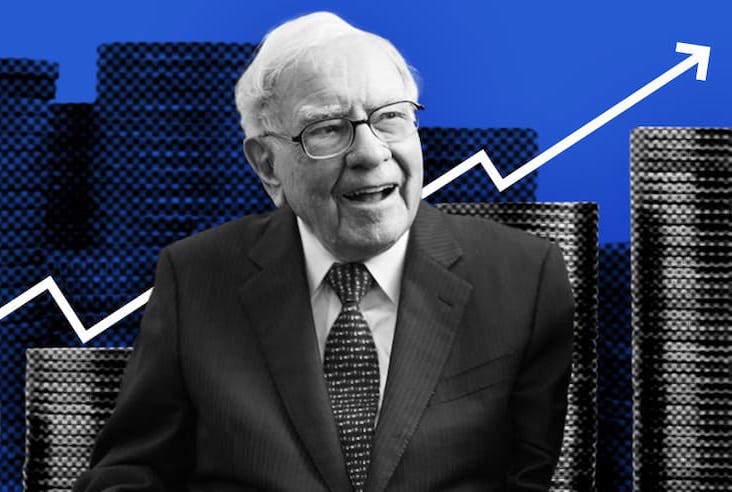
“If your wife is going to have a baby, you’re going to be better off if you call an obstetrician than if you do it yourself. And if your plumbing pipes are clogged, you’re probably better off calling a plumber. Most professions have value added to them above what the laymen can accomplish themselves. In aggregate, the investment profession does not do that. So you have a huge group of people making — I put the estimate as $140bn a year — that, in aggregate, are and can only accomplish what somebody can do in ten minutes a year by themselves.”
– Warren Buffett
The Financial Times tells an interesting story of a the wager between Buffett and Ted Seides of Protégé House in 2006. Protégé is a “Fund-of-Hedge-Funds”, ie a fund that specializes in selecting Hedge Funds for clients to invest now. Hedge funds are expensive, often charging 2% each year of the assets they manage plus a performance fee which can be as high as 20% of the fund’s profits. Fund-of-funds accentuate this problem as they have another layer of fees on top of the Hedge Funds they invest in.
In contrast, the S&P 500 index fund that Buffett chose in the wager charged just 0.04%. After a shaky start, Buffett eventually won the bet. Said Buffett:
“A number of smart people are involved in running hedge funds. But to a great extent their efforts are self-neutralising, and their IQ will not overcome the costs they impose on investors. Investors, on average and over time, will do better with a low-cost index fund than with a group of funds of funds.”
– Warren Buffett
Is it different in Malaysia?
In a recent article titled “FBM KLCI’s lost decade and the Fallen Giants”, TheEdge publication remarked it has been a “sobering” decade for Malaysian equities. An investor who bought the 30 FBM KLCI component stocks on 30 June 2015 and held the portfolio until 30 June 2025, would have achieved an estimated return of only 24.3%. There were some winners, the biggest one of which is Hong Leong Bank Bhd, but there were quite a number of losers which included big names such as Petronas Chemicals, Maxis, Genting Malaysia, UMW, Genting, Axiata, BAT, Astro and Sapura Energy (now Vantris Energy).
The publication noted some reasons for the slide in these companies:
Astro & BAT – Shifting industry dynamics.
UMW & Sapura Energy – Oil price slide taking its toll and Sapura’s debt fueled buying spree.
Axiata – Expansion into overseas markets which proved too competitive as the company bit off more than it could chew.
Genting / Genting Malaysia – Scrutiny over related party transactions and covid impact.
While the methodology used in the calculations are unclear, the article does raise some interesting questions as to how well the FBM KLCI index represents our broader economy. On the one hand, we have been told that the economy has done just fine while on the other hand, the country’s top companies as represented in the FBM KLCI are struggling to keep up with the cash rate which has been dismal to say the least. Other than wealthy people and risk takers, should winners in a low interest rate climate not include corporations and businesses?
Notably quite a few index component companies are GLCs and that makes things a bit blurry as free market concepts are thrown out the window. Furthermore the palm oil sector, our cash cow and key export earner in Malaysia, is hardly represented in the index even though it is a big chunk of Bursa Malaysia’s market cap.
This begs the question… are Index Funds just a dream for Bursa Malaysia? Even if an index fund is designed to mirror the FBM KLCI, should investors bother? Will some of the current index component companies turn out to be dogs like before? Unless you are a good stock picker, why not just keep your money in EPF instead? It has a track record of better returns for the same given period and arguably a superior diversification and lower risk profile.